
Les Bougies Divines
Deciding When Everything Is Blurred
Oct
Some decisions hold out not because they are hard, but because we never look at them for more than three minutes at a time. The Divine Clarity candle brings no answer, and that is not its role: here a candle serves to hold the time you need in order to see.
The problem is not always the decision
We tend to assume a decision drags on because it is complicated. Sometimes it is simpler than that: we have never given it a whole moment. We think about it on the train, between two messages, half asleep. Each time, we start over. Nothing moves forward, not for lack of courage but for lack of continuity.
What an interruption does
A line of thought needs time to reach its end. Interrupted every two minutes, it never unfolds. We circle the same first objection for weeks and end up believing the matter is insoluble, when in truth we have simply never read it through.
Giving yourself a time that ends
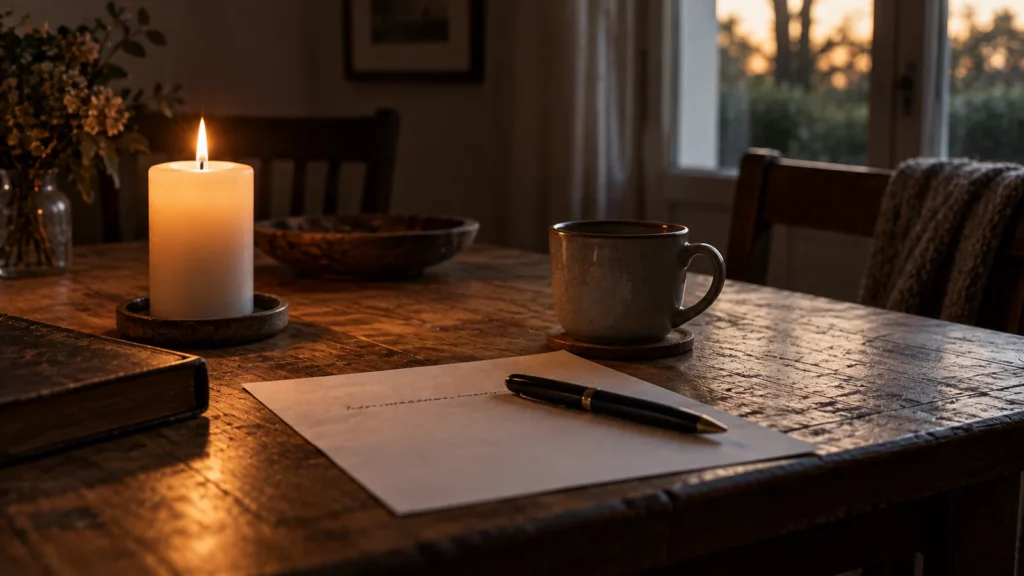
The use of a candle here is very concrete: it measures time without a clock. You light it, you sit down with the question, and you know the moment will last. It is not the flame that clears anything; it is the staying. The Divine Clarity accompanies that kind of settled time, the sort you grant yourself to look at something squarely.
Clear does not mean pleasant
A decision that has become clear is not necessarily comfortable. Often we already knew, and what was missing was not information but the quiet needed to admit it. Clarity does not make the choice easy; it makes it possible.
Write the question in a single sentence
One thing helps a great deal before you sit down: write the question in one sentence, on paper, without justifying it. Most decisions that drag on have never been put into words; we circle a discomfort, not a question. In a single sentence you often discover that you were hesitating between two things that do not exclude each other, or that the real question was elsewhere. Only then do you light the candle, sit down, and read that sentence again. The time of one flame is rarely enough to decide, but it is almost always enough to know what you are deciding.
A question, a chair, and the time of one flame: sometimes that is all that was missing. The Divine Clarté. Discover the collection.
